A fall porch does not need every autumn decoration at once. Start with the door, the space you use every day and one color direction. Then choose a few pieces that work together.
Planning your own layout? Start with the space and door swing. Looking for help in Downingtown? Use the proposal worksheet to describe your porch and the work you want.
1. Read the space before choosing the décor
Take a straight-on photo from the walkway and a second from the side. Note where the door swings, where deliveries land and which planters or furniture you want to keep. Measure the areas available for decoration rather than treating the whole porch as display space.
Keep the entry usable: leave doors, steps, handrails and the route through the porch clear. If a grouping only works by taking over the walkway, reduce it or move it beside the entrance.
2. Let the house set the palette
Look at the door color, brick or siding, and existing hardware. Choose a main color and one or two supporting tones. These are starting directions to adapt, not fixed rules:
- Warm and gathered: orange pumpkins, clay-colored vessels and muted foliage.
- Quiet and pale: cream pumpkins, green foliage and a dark planter for contrast.
- Deep and autumnal: rust tones, darker foliage and a few pale accents.
Repeat a color in two places to make the arrangement feel connected. Before buying more pieces, try removing the one color or material that does not belong.
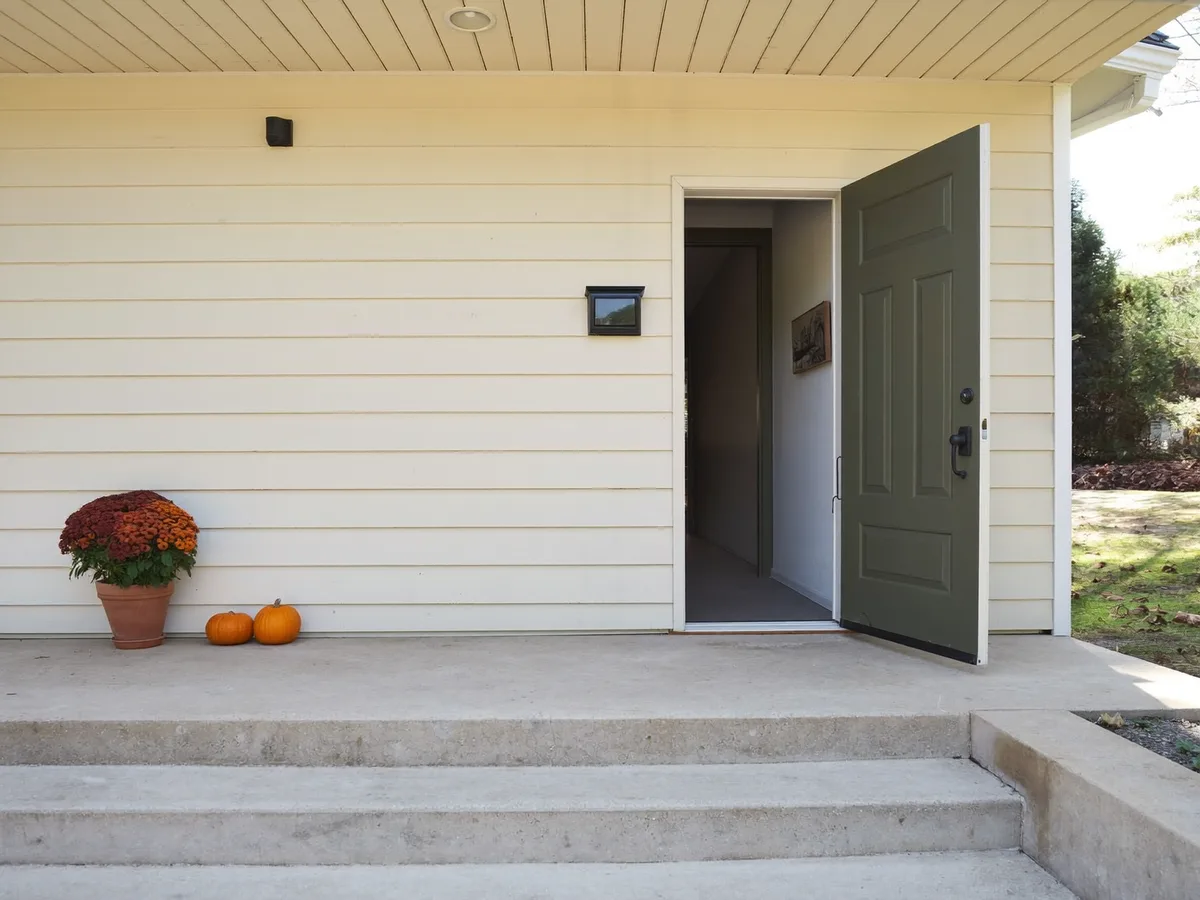
3. Give a small stoop one clear focal point
A compact entry may work better with one grouping than with matching planters on both sides. Check the space with the door open before choosing a symmetrical arrangement.
Hypothetical porch: cream siding, a navy front door, dark railings and central steps. There is more space to the left of the door. An outward-opening storm door needs room in front of the entrance. Nothing has been bought or installed.
Choose the side that has room
The first sketch puts a planter on each side, with pumpkins between them. Including the storm door reveals the problem: the right planter would crowd the entrance.
Rather than add more pieces to balance the drawing, revise the plan to one group on the wider left side. A planter gives it height; two pumpkins sit beside it within the planned area. A simple wreath repeats a little color at the door.
Measure the planter's full width and the foliage beyond its rim. Compare cardboard footprints from both the walkway and threshold. If the leaves extend into the entry, reduce the group before selecting products.
Keep the route and delivery space available
Draw the storm door's opening arc and the route from the steps to the entrance. Keep the group outside both. In this example, the proposed row of pumpkins beside the steps is dropped.
Leave the handrail, threshold, house number and doorbell usable. If parcels normally sit on the left, reserve their space before assigning the whole corner to a planter. Include the access needs of everyone using the entrance.
FEMA's decorating guidance supports keeping exits clear. This sketch does not establish code compliance or replace a site-specific access assessment.
Repeat the house's colors
The cream siding and navy door already provide the background. In this proposed arrangement, muted orange pumpkins and green foliage sit in a dark planter that connects with the railings. A small orange detail in the wreath repeats the pumpkin color.
Compare possible colors outside, in the light that reaches the porch. If the orange dominates, try a paler pumpkin before changing every piece. Use the earlier palette section to choose another direction.
The shopping plan: one left-side planter group, two pumpkins within its area and a modest wreath. Check full dimensions, outdoor-use instructions and actual door clearance before buying. If the arrangement takes over the everyday route, make it smaller.
A measured compact-entry sketch
Hypothetical dimensions, not an installation: after reserving the door swing, steps, everyday route and parcel spot, the sketch leaves a 28-inch-wide by 22-inch-deep display area beside the entrance. These numbers describe a fictional display area, not a recommended passage width or a code-compliance rule.
Suppose the complete planter-and-pumpkin grouping, including foliage, occupies 24 by 18 inches. It fits inside that drawn area with 4 inches left across the width and 4 inches across the depth in total—not 4 inches on every side. A larger 30-inch-wide planter would not fit this sketch even before adding pumpkins.
Mark the full 24-by-18-inch footprint with cardboard. Open the door fully and try the normal approach with a delivery parcel. If foliage, a handle or someone's access needs use more room than the drawing allowed, shrink the display or omit it. The arithmetic checks the sketch; it does not prove that the real entrance is suitable.
4. Use repeated groups on a larger porch
Decide where you want the eye to land: the door, a pair of planters or a seating area. Build the strongest grouping there, then repeat a smaller version elsewhere. A larger porch does not require a continuous line of pumpkins across every edge.
Leave open areas between groups so that furniture, architectural details and everyday use still have room. View the arrangement both close up and from the street before adding more.
A measured wide-porch sketch
Hypothetical concept: a porch measures 144 inches across and 72 inches deep. The planner first marks the door swing, step approach, furniture use and delivery space. Only then do they identify two separate 24-by-30-inch display zones beside the entrance; the overall porch dimensions alone do not establish usable space.
In each zone, a proposed group measures 20 inches wide by 24 inches deep at its widest points, including leaves and pumpkin stems. Each has 4 inches of unused width and 6 inches of unused depth in total within its zone. Those remainders belong to the display sketch; they are not walking clearances.
Repeat one color or planter shape across the two groups, then leave the everyday route between them open. If one side loses space to a chair or an outward-opening door, use a smaller group on that side instead of forcing symmetry. Do not fill the steps with extra pumpkins to use up the remaining stock.
For either sketch, send the measured display zones and photos of the door open with your porch inquiry brief. Confirm real access needs and the final arrangement before selecting materials; these examples are not code or accessibility assessments.
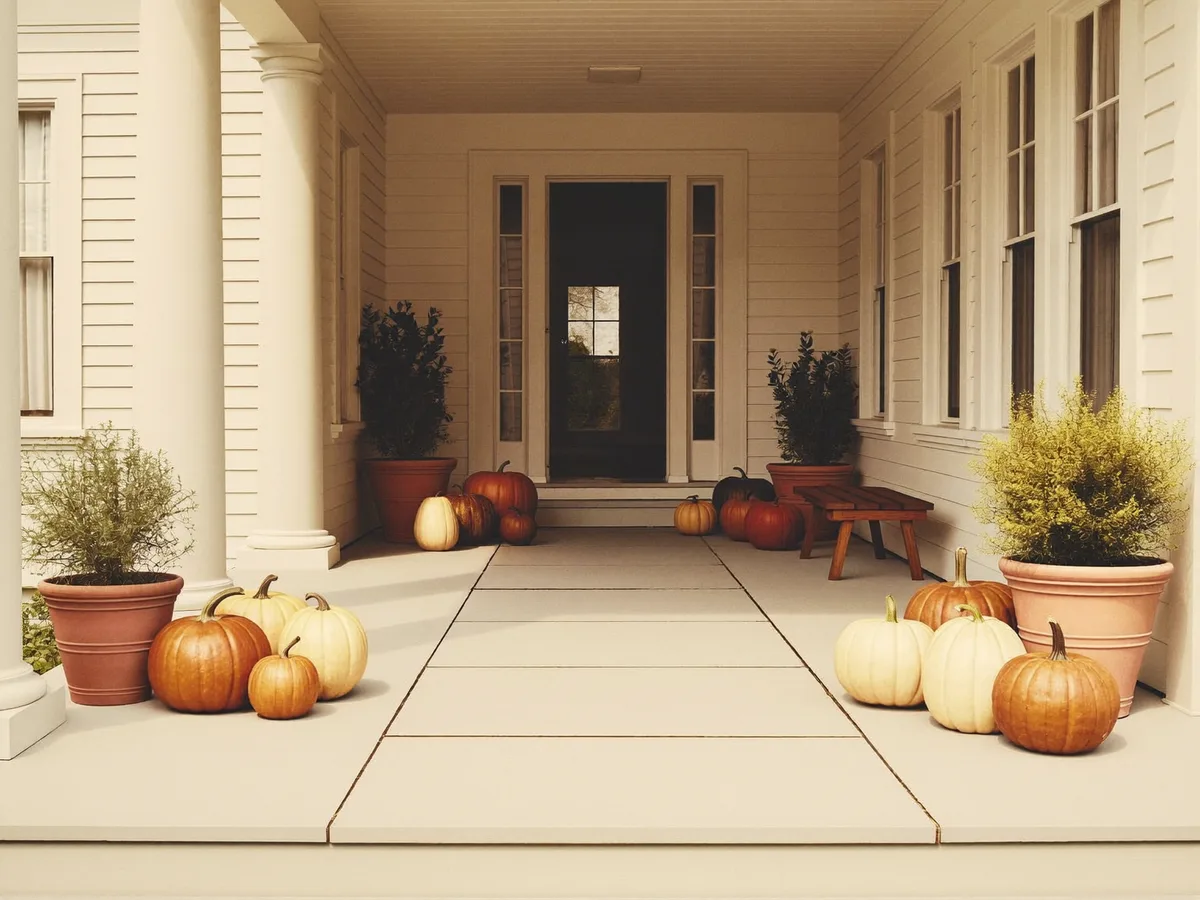
5. Make a plan for buying, care and cleanup
Before you shop, work through what to keep, what to add and the care you want to do.
- List what you already own and want to reuse.
- Choose the placement and approximate scale of each group.
- Separate fresh materials from reusable planters and accents.
- Decide who will water plants, check the display and remove it.
- Allow room in the budget for delivery, styling or collection if you want help.
Fresh materials change with weather and placement. Ask the supplier about the materials you choose rather than assuming every display will last until a particular holiday.
Learn how storage conditions differ from porch life, with a pumpkin-care check sheet.
Before you choose materials, describe the exposure
Tell your stylist whether the porch has a roof, which parts receive afternoon sun, and where rain reaches the entry. Mention any spot where water collects. A photo taken from inside the doorway can show shelter and depth that a street-facing photo misses.
Agree on who will care for plants after installation and who to contact if a piece needs attention. Ask about the specific materials in your proposal; a photograph cannot tell you how long fresh plants or pumpkins will last at your home.
Before approving the layout, check it with your door open and the porch in normal use. Leave room for deliveries and the people who use the entrance. Include any access needs in the brief before the stylist chooses the display size.
Front & Found serves Downingtown, Pennsylvania only. Email sam@aibusinessboomer.com with your preferred timing and porch details to start the conversation.
DIY or a styling service?
DIY gives you control over shopping and arranging. A styling service can bring sourcing, delivery and setup into one proposal. Compare the whole scope, including travel, reusable pieces and removal, rather than the pumpkin count alone.
Read what to include in a porch-styling budget →
What should I photograph for a porch proposal?
A full view of the entry, a side view showing the available depth, and the pieces you want to keep are a useful starting point. Include measurements and your town when discussing the project. Avoid sharing house numbers or other private details in public comments.